 Knowledge Sharing Platform

Garters
Garters
Garters
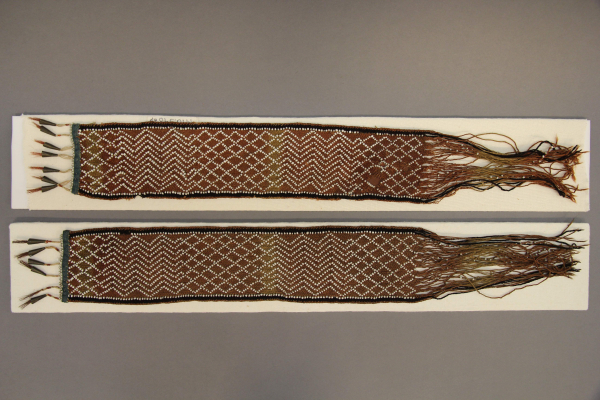


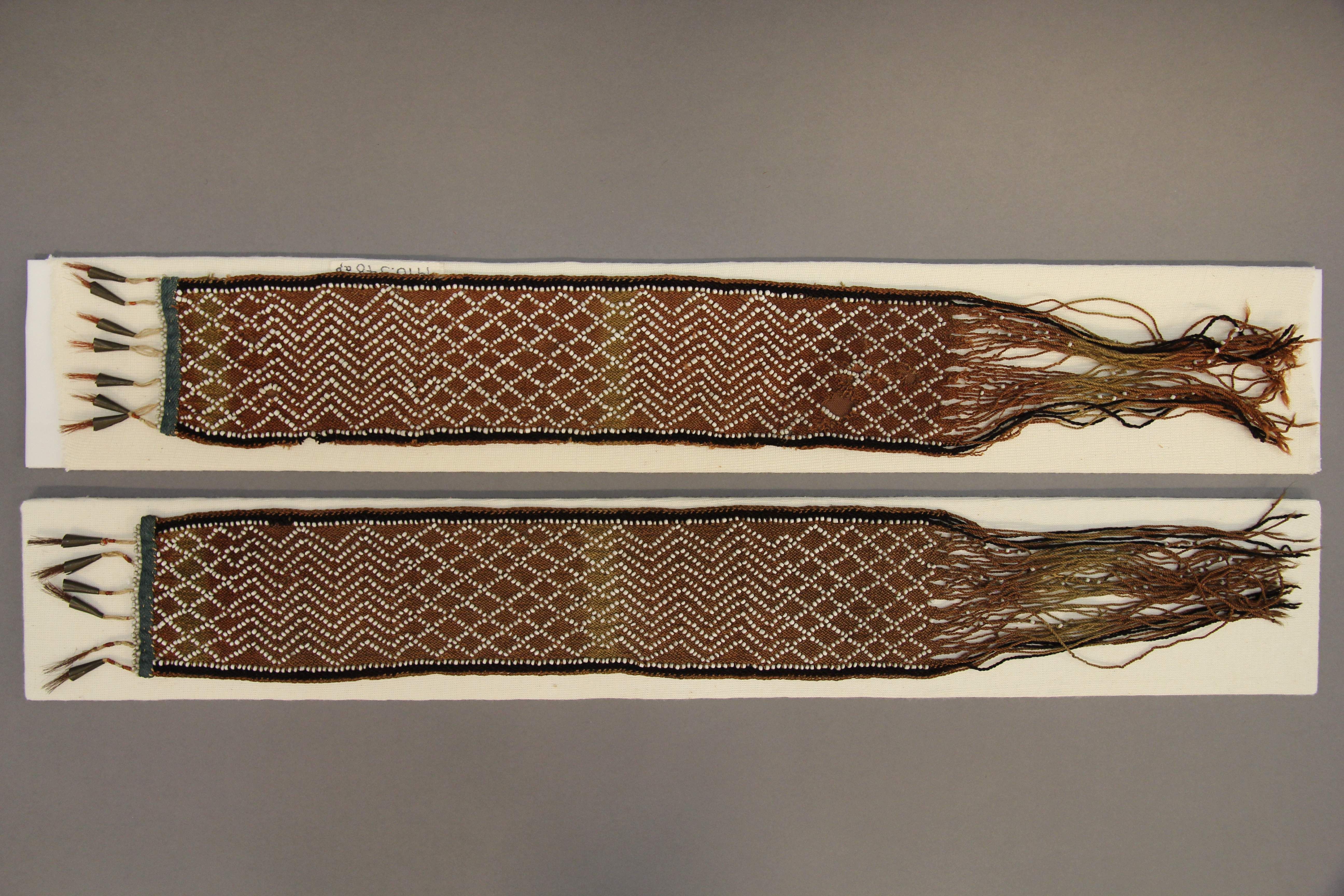
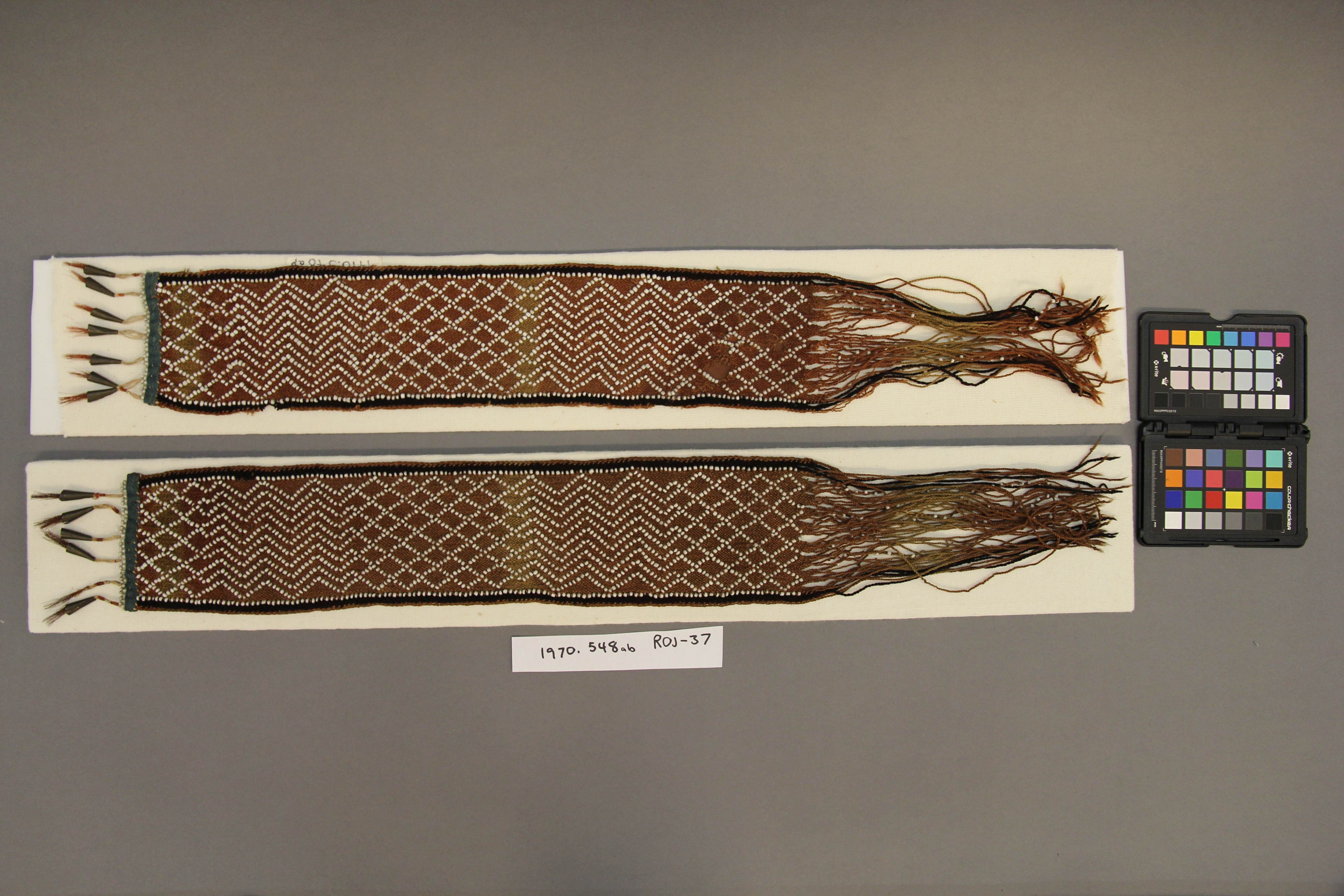
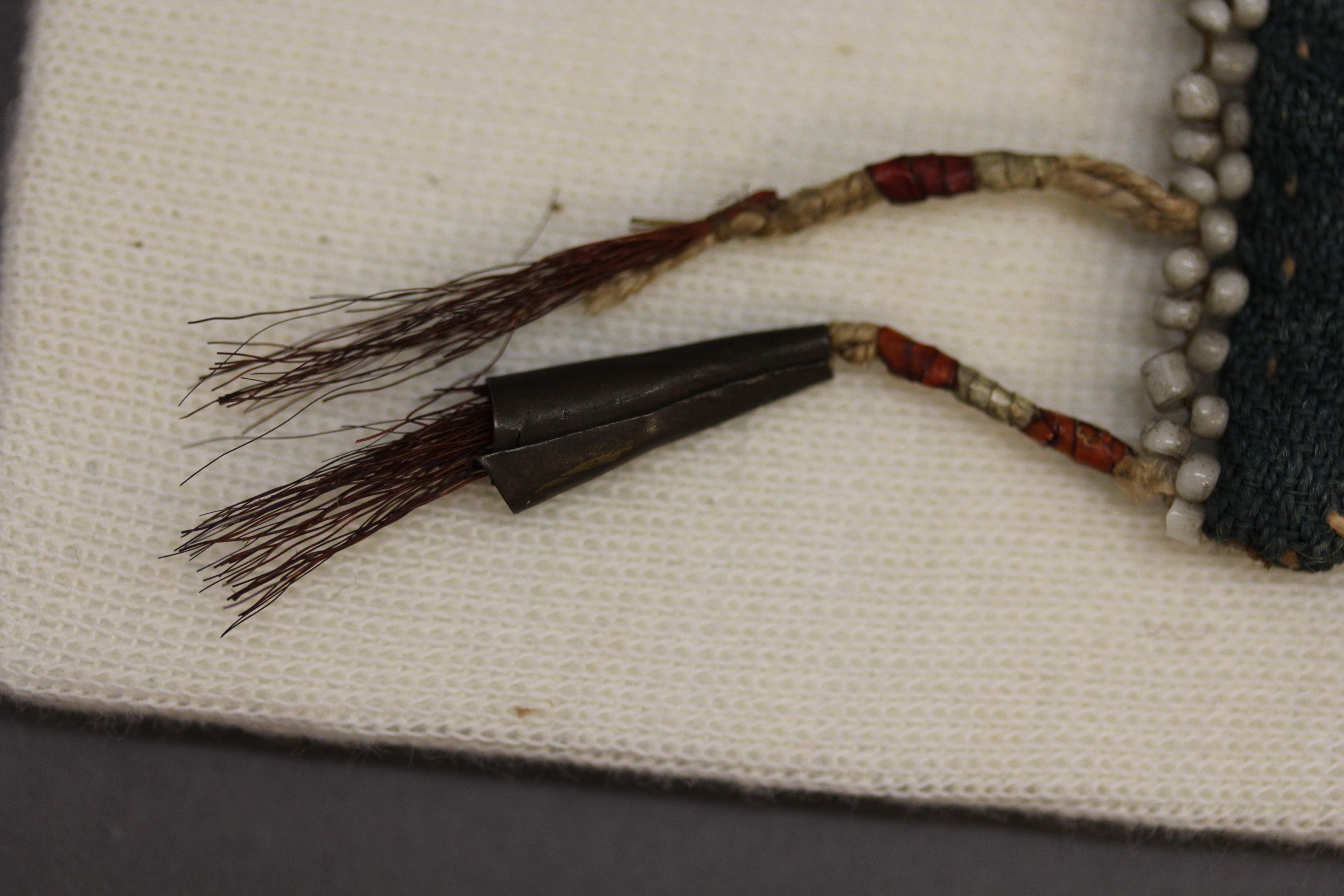
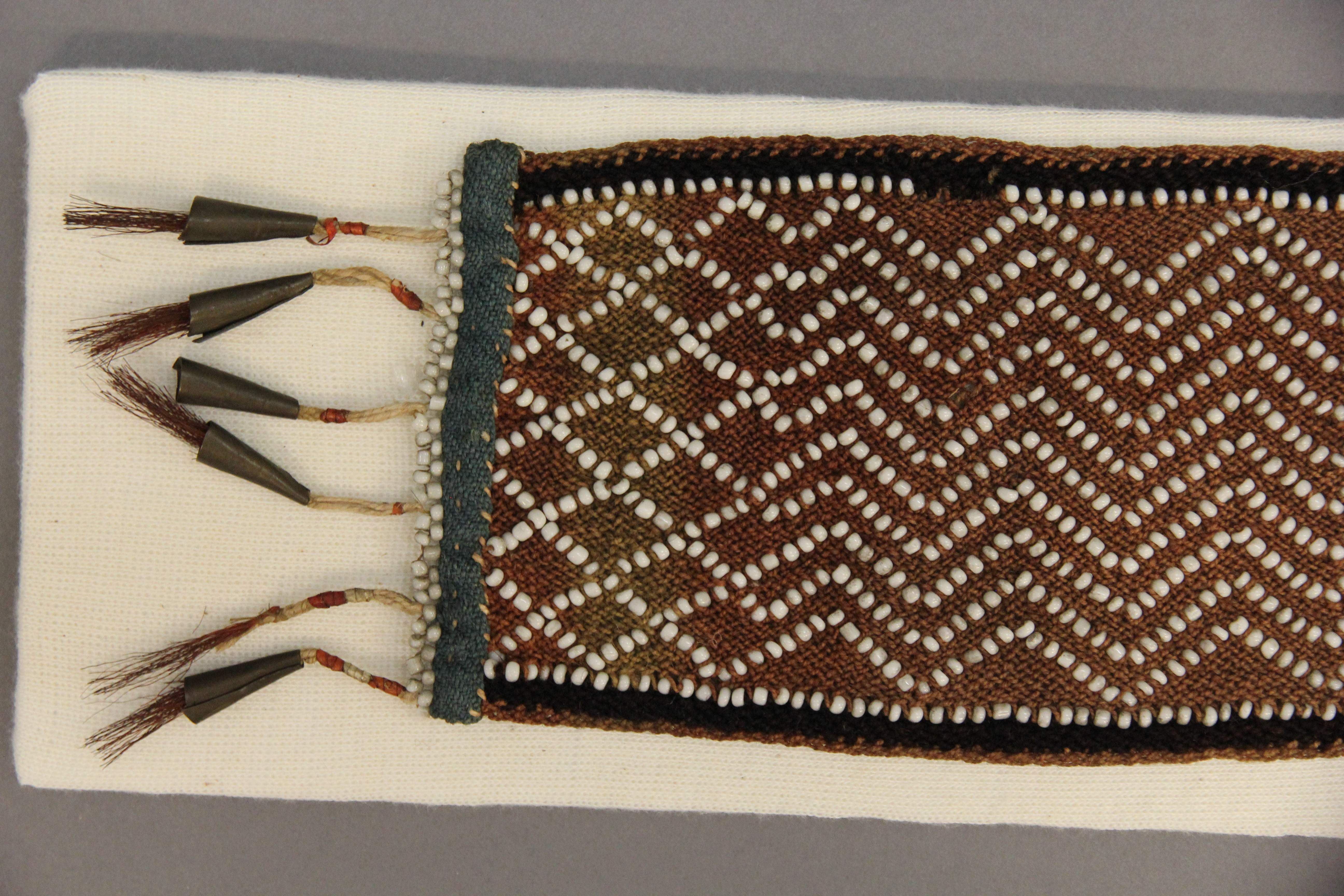
These relatives, a pair of Anishinaabe finger woven garters, are made of woollen yarn with interwoven beadwork in geometric designs of zigzag, cross-hatch and diamond motifs. One end of garters ends in loose thread fringe ornamented with white beads; other end of garters ends in fringe of wrapped quillwork and tin cones filled with dyed animal hair.
These relatives currently reside in the Denver Art Museum.
This information is based on museum documentation.
Read More About This Relative
woollen yarn, dark brown and light brown/yellow; opaque white glass beads; porcupine quills natural and dyed orange; tin cones; animal (possibly deer?) hair dyed red or orange; blue cotton fabric.
Garters are finger woven with interwoven white beadwork in geometric design. One end has loose fringe of woollen yarn; some of the loose threads are ornamented with white beads. Other end of garters is trimmed with blue cotton fabric and has fringe of wrapped porcupine quills natural and dyed orange, ending in tin cones filled with animal (possibly deer?) hair dyed orange.
A line of darker woollen yarn is woven along either side of the garters. Dying technique of light brown woollen yarn creates yellow lines. Interwoven beaded patterning is geometric with zigzag lines, cross-hatch, and diamond shapes.
Provenance
This relative may have been sold at auction on December 8, 1969 by Sotheby and Co. at Warwick Castle, England (this information was provided by Eli Motsay in October, 2024 via GRASAC webform submission).
It was later purchased by the National Museum of Ireland from James P. Economos in 1970.
Denver Art Museum documentation.
Potential source provided by Eli Motsay:
Catalogue of Primitive Art and Indian Sculpture: The Property of The Trustees of The Warwick Castle Resettlement “A Collection of American Indian and Oceanic Art: The Property of The Trustees of The Warwick Castle Resettlement” Sotheby and Co. , London, on 8 December 1969.
Kaufman, J.E. (2003). "Ralph T. Coe discusses his collection and how the market for American Indian material has changed over the years," The Art Newspaper. https://www.theartnewspaper.com/2003/10/01/ralph-t-coe-discusses-his-co…
"James Economos in Santa Fe was the first dealer in North America specialising in American Indian art and once had the market nearly to himself, as far as I know."
Art Daily. (2019). "James Economos: A life remembered." https://artdaily.cc/news/116029/James-Economos--A-life-remembered
About This GRASAC Record
Maker, Name unrecorded. Garters. GRASAC ID 26678. Denver Art Museum 1970.548 a and b.
This record was augmented by Dana Murray on June 27, 2025. It draws on images and information collected during a GRASAC research visit to the Denver Art Museum on January 22, 2024. Participants included Alex Nahwegahbow and Ruth Phillips, who were assisted by Eric Berkemeyer and Kristin Strid.